Perth
I am sat at Hobart airport faced with a 2 hour delay for my flight to Sydney, a good time to start reporting on the Australia part of the trip. To be honest, it is the first delay I have had in the whole trip so far so I can’t complain.
So Perth, it’s not somewhere people tend to go but it was suggested to me as I was going to fly over it anyway, and I was curious!
Perth was founded by the British (common theme) as the capital of the Swan River Colony in 1829, but was originally inhabited by the Whadjuk Noongar people for thousands of years. It was the first free settler colony in Australia and began receiving convicts from 1850 to build roads and public infrastructure. Transportation to the eastern states had stopped but Perth had a shortage of labour so opened up to taking convicts.
In around 1890, gold was found in the area and Perth had a mining boom, the profits of which financed the construction of the city buildings, roads and railway network.
I stayed at Spinners Hostel, in the Northbridge district, which was really good. I was in a room on the ground floor and had access to 2 really clean and modern bathrooms!
Perth has a system of free buses in the central area which was ever so handy, it has had the highest population growth in the past 10 years.
The first day I rode around to see the city and get my bearings. I got to Kings park and it was amazing, perched on a hill overlooking the city. It has a cultural significance to the Noongar people who had hunting grounds there and used it as a meeting place. As it was a Sunday, loads of groups and families were there enjoying the weather and being together. There were picnics, football and cricket games going on and I thought that it was a great facility on the doorstep.


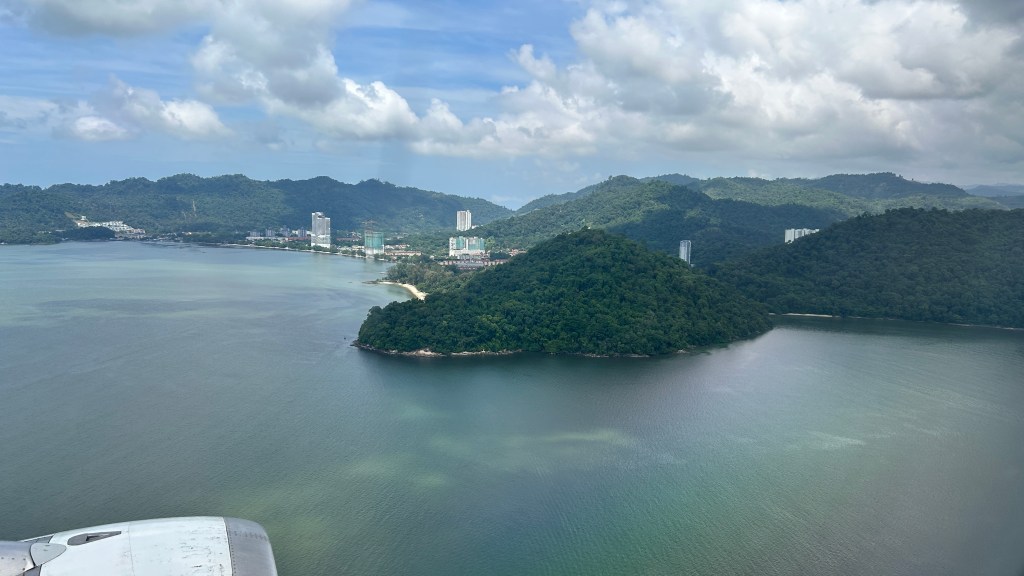
Leaving Langkawi!

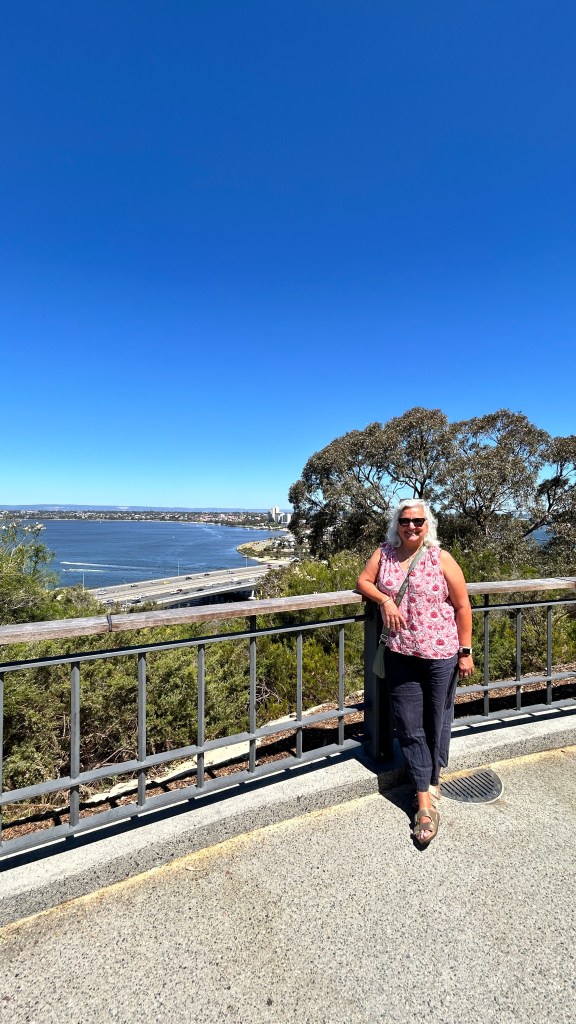

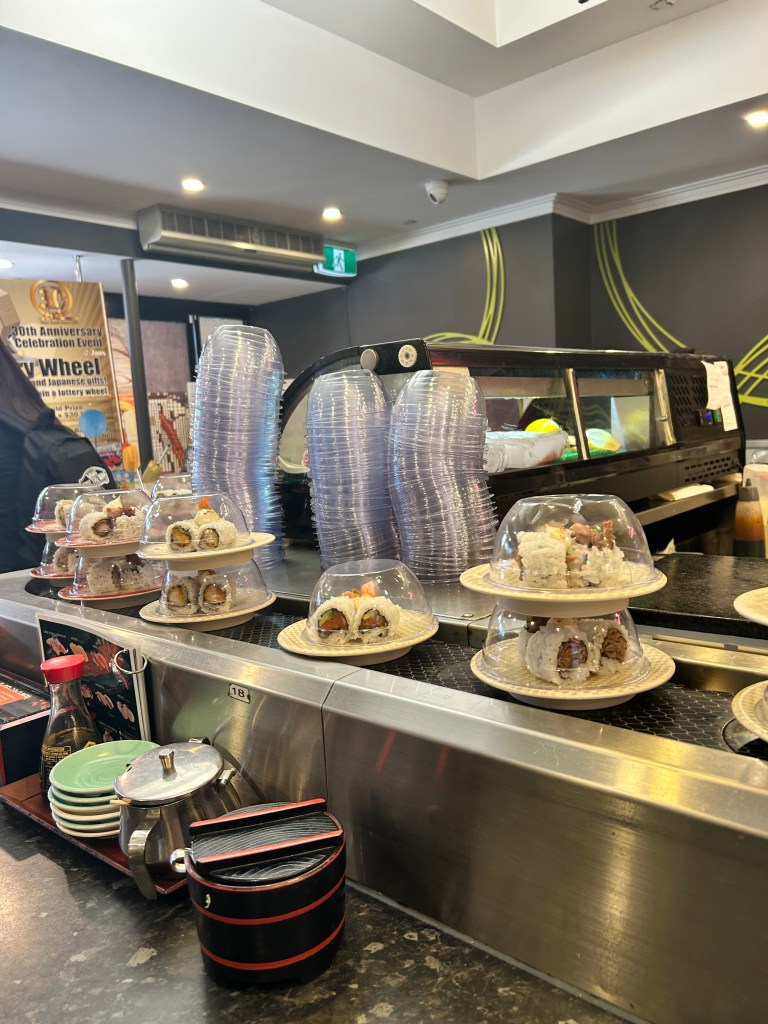
Perth was so interesting, huge Asian population and I think that I could have been forgiven for thinking that I was in an Asian country – honestly! But that meant that offer of different foods was amazingly good. Such an amazing choice of Chinese, Japanese, Korean – every single Asian food was there, and it was sooo good as Asian people were cooking and eating it. Having said that, the population in Perth is so diverse, obviously the highest is British and Irish born residents, but 5.3% of the population are of Chinese descent, 3.6% Indian.
The Indian community includes a substantial number of Parsees ( like Freddy Mercury) who emigrated from Bombay —Perth being the closest Australian city to India—in 2021 Perth is also home to the largest population of Anglo Burmese in the world; many settled there following the independence of Burma in 1948 with immigration taking off after 1962. The city is now the cultural hub for Anglo-Burmese worldwide – sorry to digress but I thought that was an interesting fact!!



Freemantle
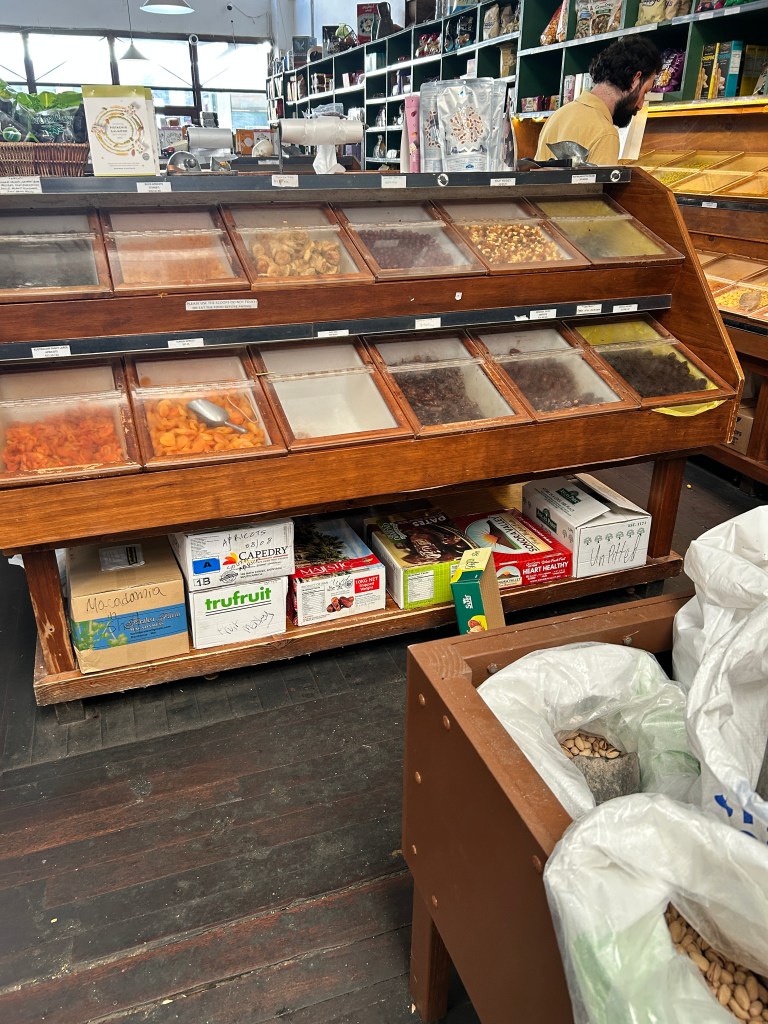
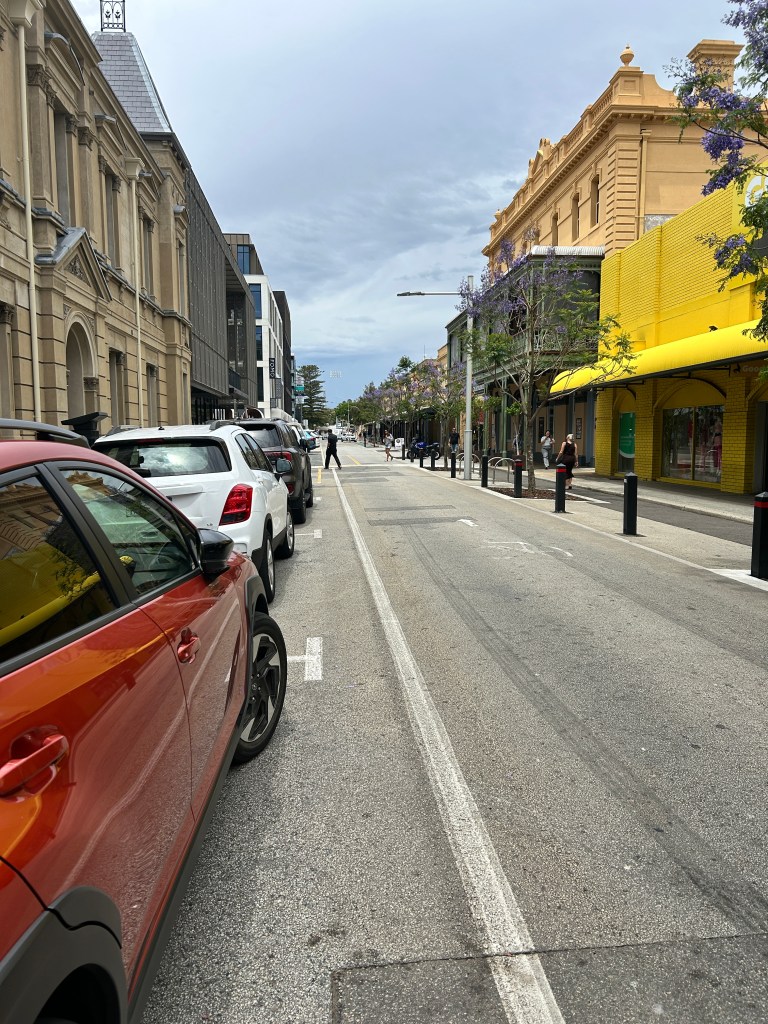
I had heard about Freemantle but again, not sure why or how, I had contemplated staying there (glad I didn’t) but I did do a day trip on the train. I described the town to Rajiv as Glastonbury on steroids, I will leave it up to you to conjure up a vision
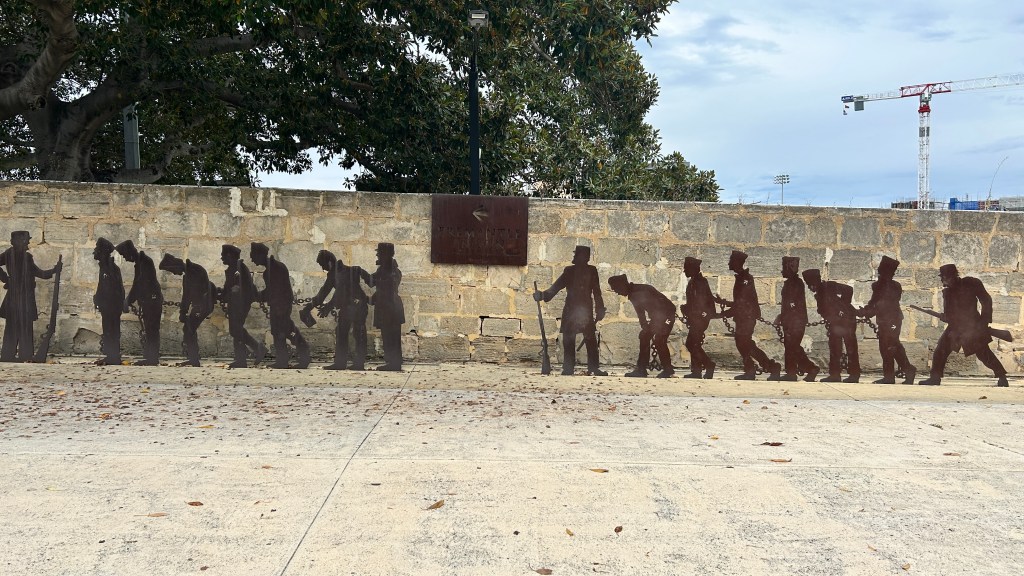
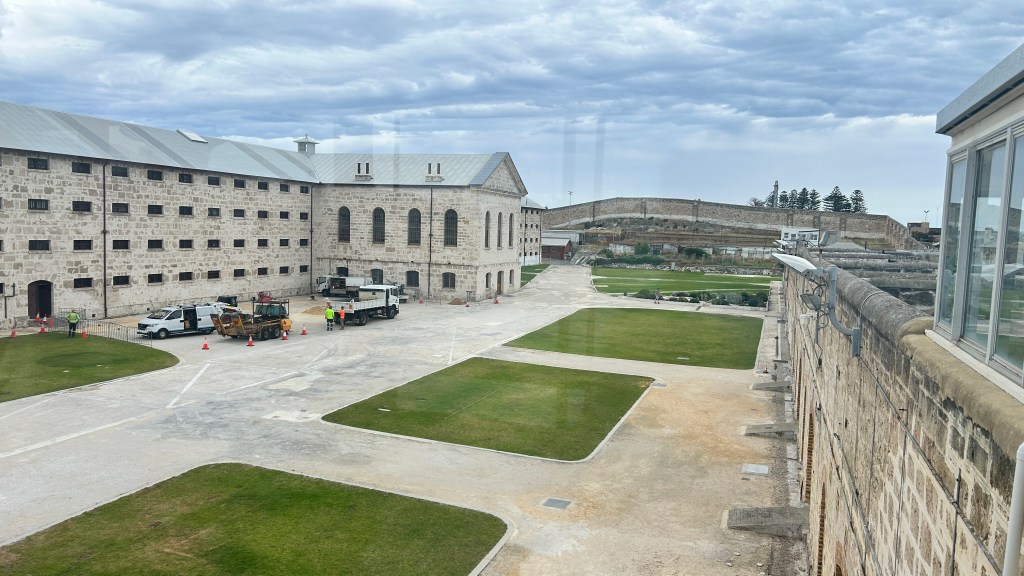
Obviously my first stop was the gaol, a former Australian prison and World Heritage site. The site includes the prison cellblocks, gatehouse, perimeter walls, cottages, and tunnels. It was initially used for convicts transported from Britain but was transferred to the colonial government in 1886 for use for locally-sentenced prisoners.
While the Swan River Colony was established as a “free settlement” by the 1840s demand for cheap labour overcame an early reluctance, and as mentioned above, the colony agreed to accept some convicts from Britain. The design for Fremantle Prison was based on the Pentonville Prison in London. Construction began in 1851,and work rapidly progressed following the arrival of the Royal Engineers later that year. They trained convicts to work with limestone, which was quarried on-site, which is one of the reasons for the location of the prison≥
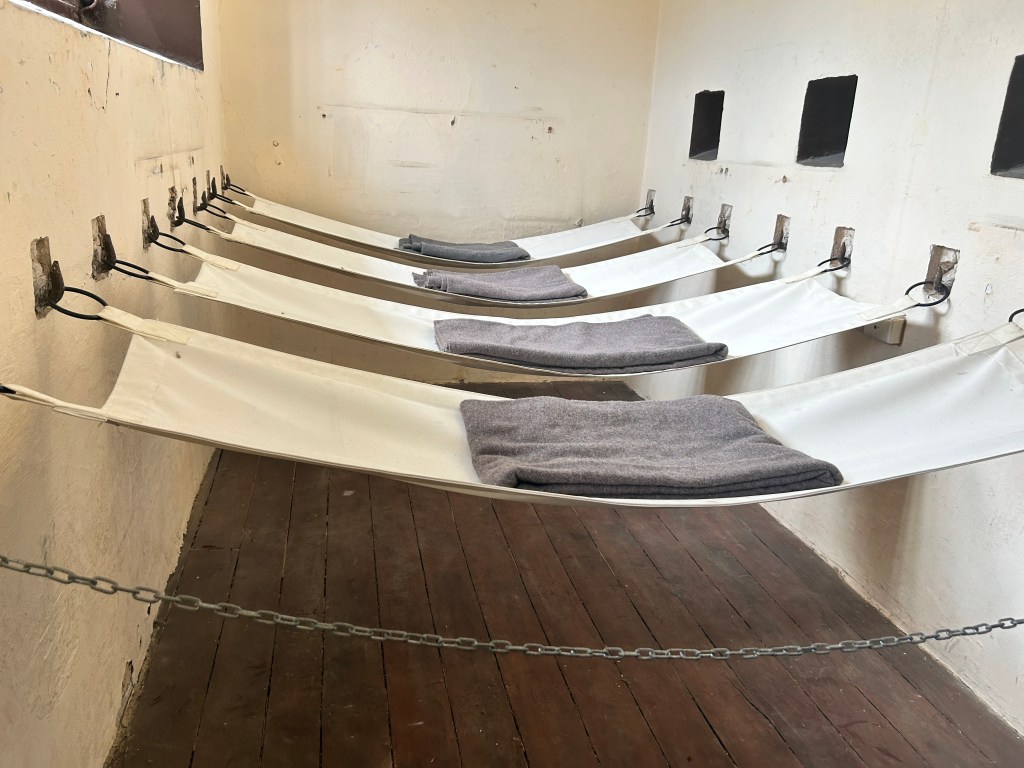
The prison walls were constructed between 1853 and 1855, but were added to over the years to accommodate the growing numbers of prisoners. The prison was closed in 1991 as the facilities were so poor – there was no water nor flushing toilets at all for the prisoners, buckets were used until the end.
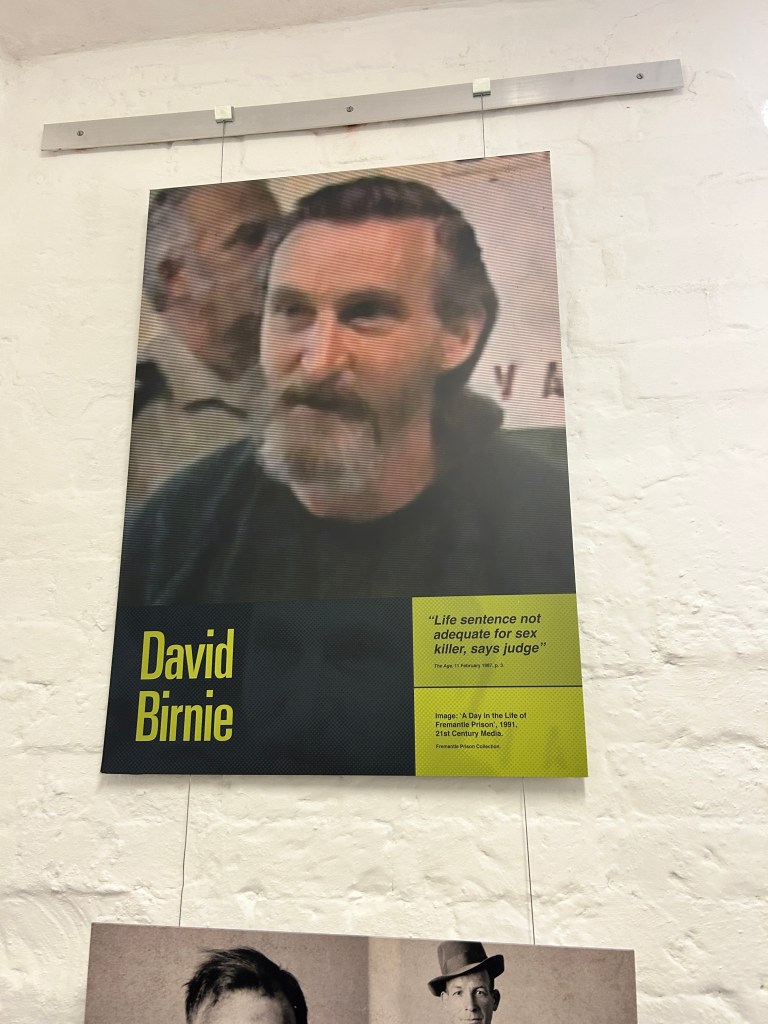
I went on 2 tours, the first was a true crime tour which took us through the site and we were told about some of the prisoners, the serial killers, the bank robbers etc and saw their cells. Our guide was a former prison guard who had worked there – I was hooked! The next tour was one that spoke about the building, how it was built, certain quirks and specific cells that we were allowed to enter. If you ever get the opportunity to go and if you like history and crime stories, I highly recommend a visit.




Rottnest Island
I was told that I must go to Rottnest Island, with the aboriginal name of Wadjemup was once connected to the mainland some 6,500 years Ago and was used by the Whadjuk Noongar people for important ceremonies and meetings. Following the colonisation of Western Australia in the early 1800s, Wadjemup played an increasingly sorrowful role in Aboriginal history. European settlers established Wadjemup first as a prison, incarcerating thousands of Aboriginal boys and men from across Western Australia, then as a forced labour camp – known as the Rottnest Island Aboriginal Establishment. A key reason why Wadjemup is painfully significant to Aboriginal communities today is the burial ground that is located in the settlement.
Aboriginal men and boys who died in custody were buried in unmarked graves on Wadjemup during the operation of the Rottnest Island Aboriginal Establishment.
Many of the deaths resulted from epidemics of influenza in 1883, which swept through the Establishment due to overcrowding. The lack of sanitation and nutrition, living and working in extreme weather, and physical and psychological abuse also contributed to the deaths.
After the prison closed, one of Australia’s largest Aboriginal burial grounds was largely forgotten about. The island became a holiday resort and the area where the Aboriginal burial ground lay became a budget camping ground known as Tentland.
During the earthworks for extending the sewerage scheme to the golf club in 1970, human remains were discovered. There was no public announcement of the discovery, and the remains were reburied.
Many people – especially Aboriginal people – felt that the failure to recognise the discovery of the graves was callous and disrespectful. It wasn’t until 1985 that the cemetery was recorded and protected under the Aboriginal Heritage Act 1972.
In 1992, the assumed cemetery area was fenced off and signs erected to inform the public of the site’s significance. Then in 1993, more bone fragments were found in the island’s main camping area about 100 metres from the known Aboriginal cemetery site. This discovery instigated a significant acknowledgement by the State Government in 1994 to recognise Wadjemup as the largest site of Aboriginal Deaths in Custody in Australia.
In 2007, Tentland officially closed to protect the graves of the Aboriginal men and boys.
In 1992, the assumed cemetery area was fenced off and signs erected to inform the public of the site’s significance. Then in 1993, more bone fragments were found in the island’s main camping area about 100 metres from the known Aboriginal cemetery site. This discovery instigated a significant acknowledgement by the State Government in 1994 to recognise Wadjemup as the largest site of Aboriginal Deaths in Custody in Australia.
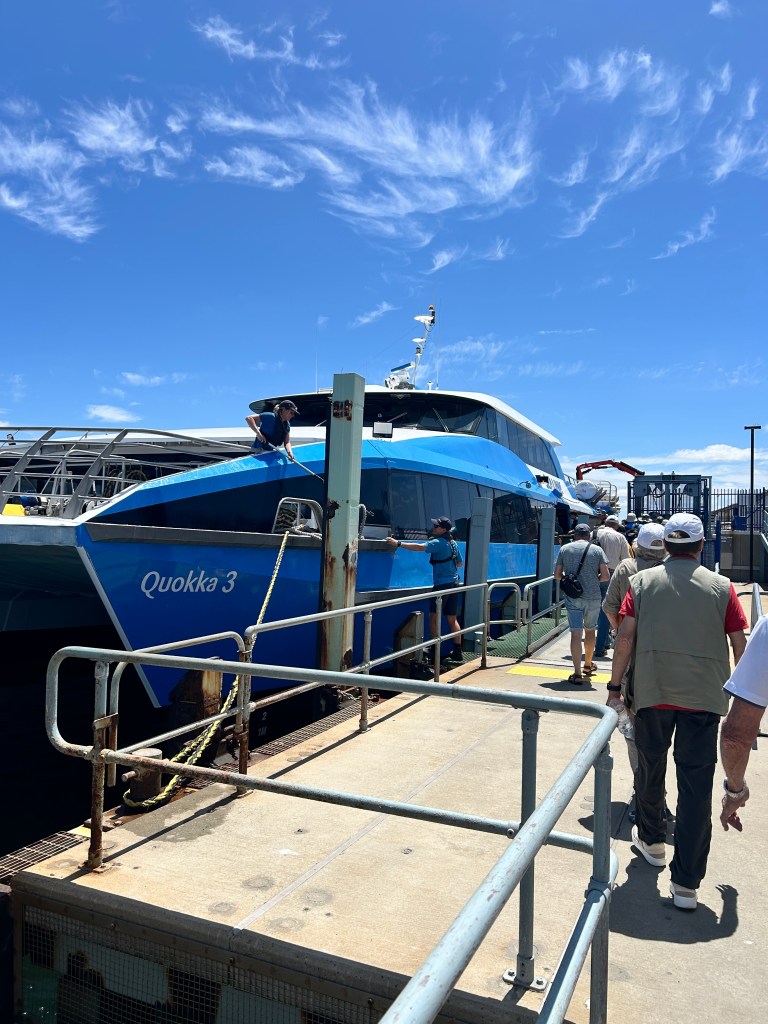
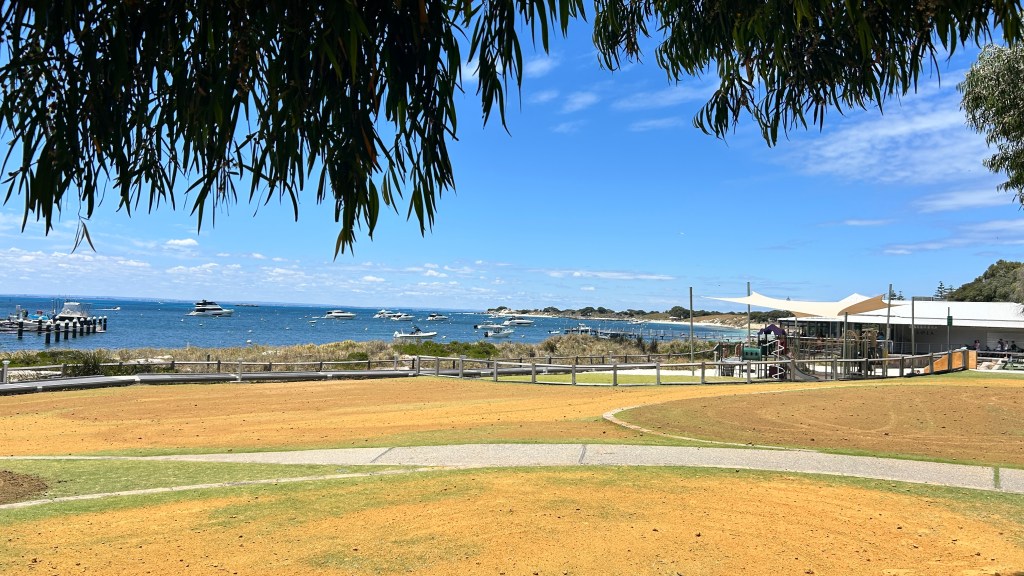
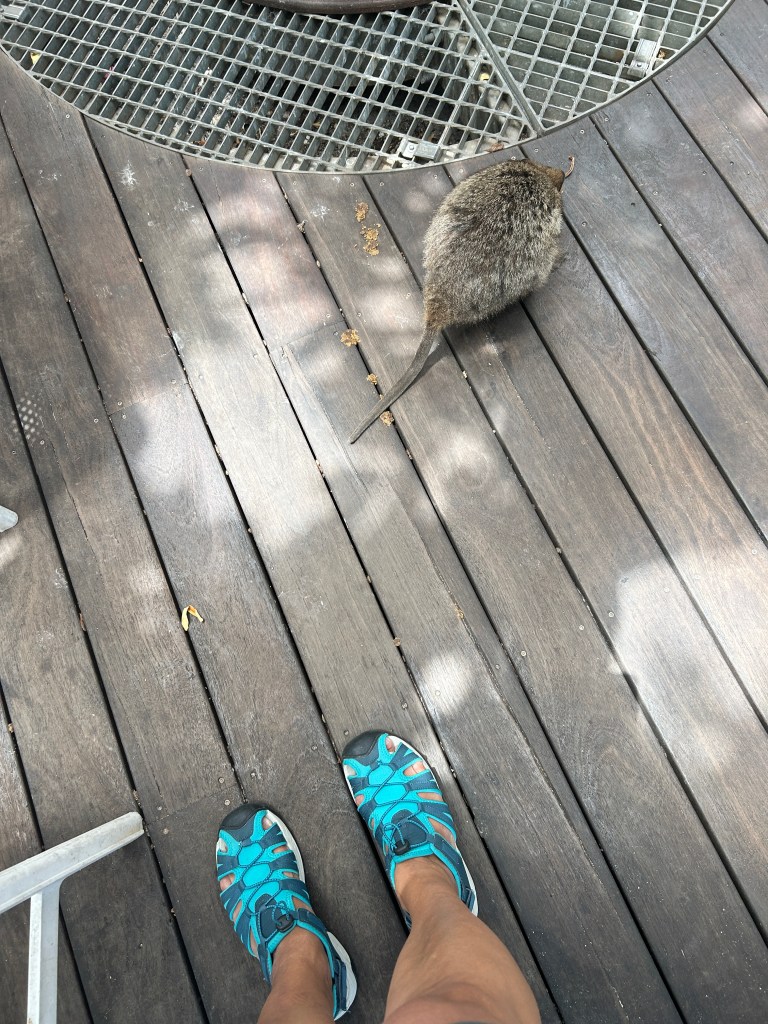
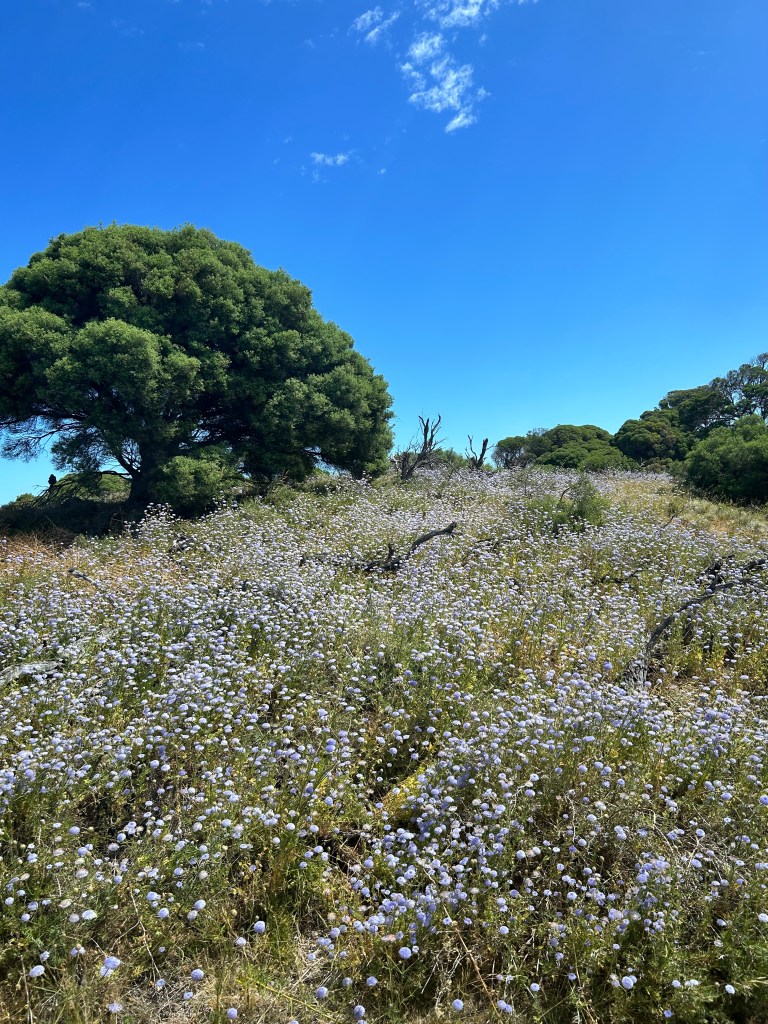
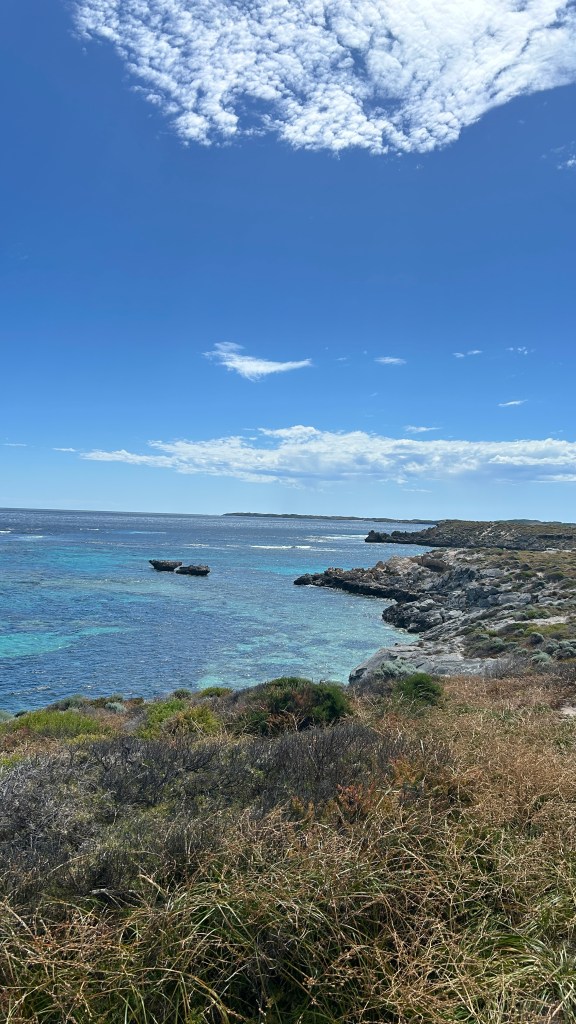
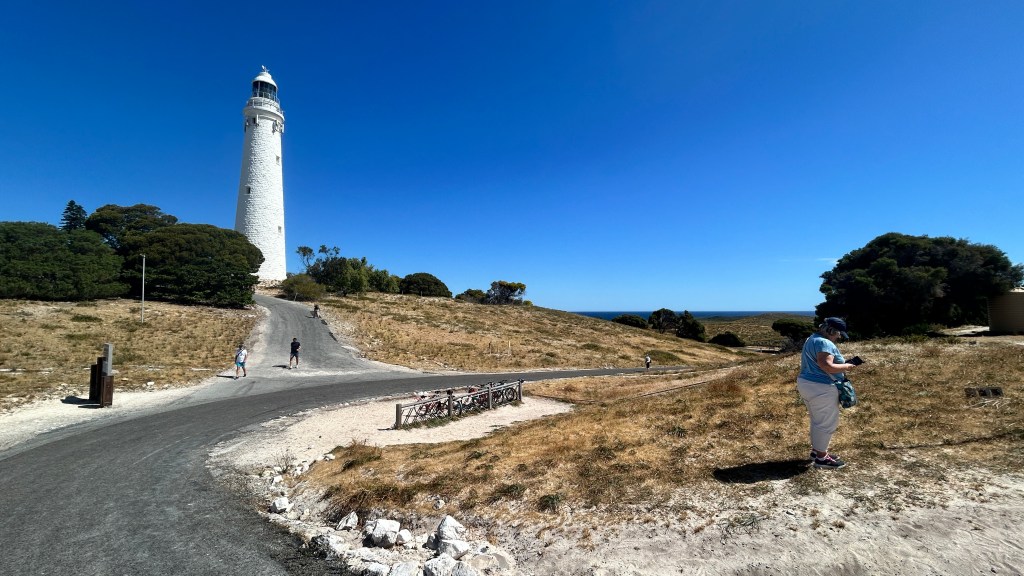
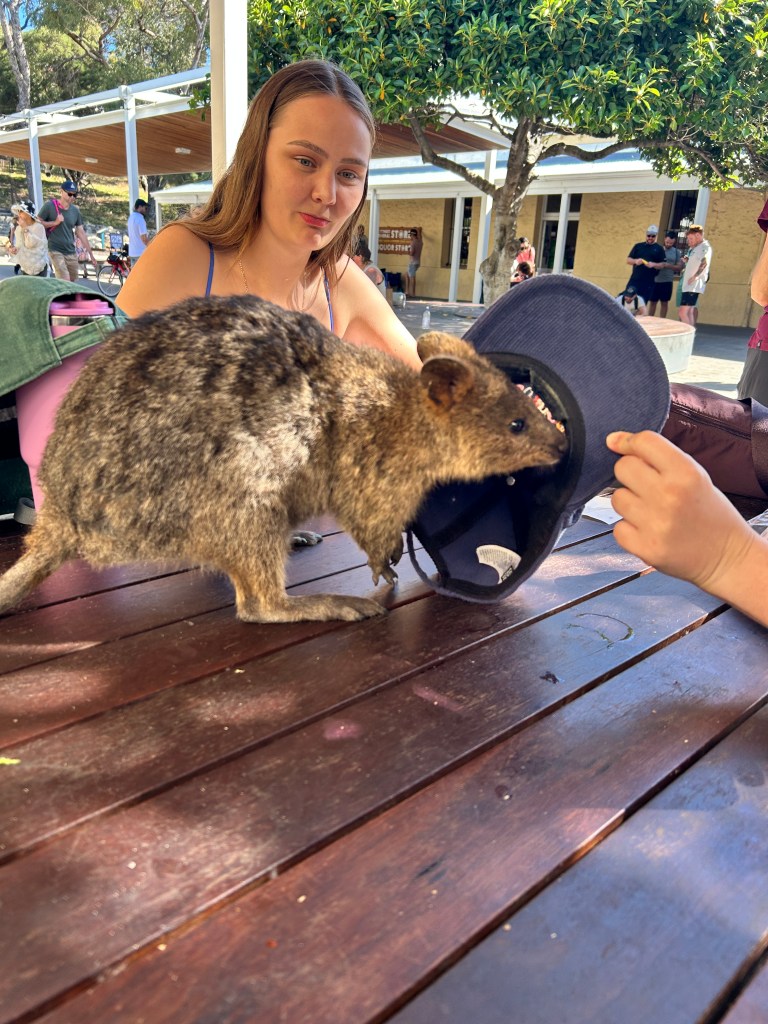
I took the ferry from Freemantle across to the island, found a great crayfish roll and met some of the local wildlife – the Quokkas. They are plentiful in the area as they know that they can scrounge food off the tables – they are mighty cheeky!
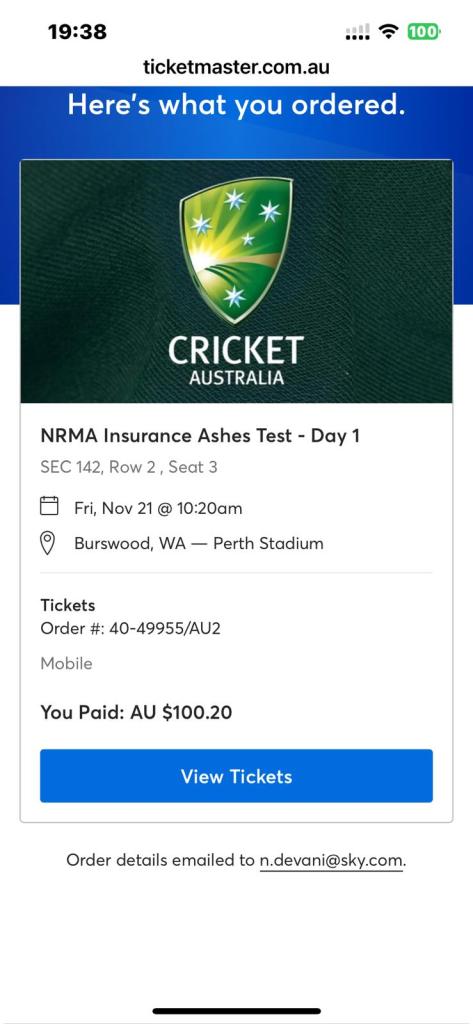
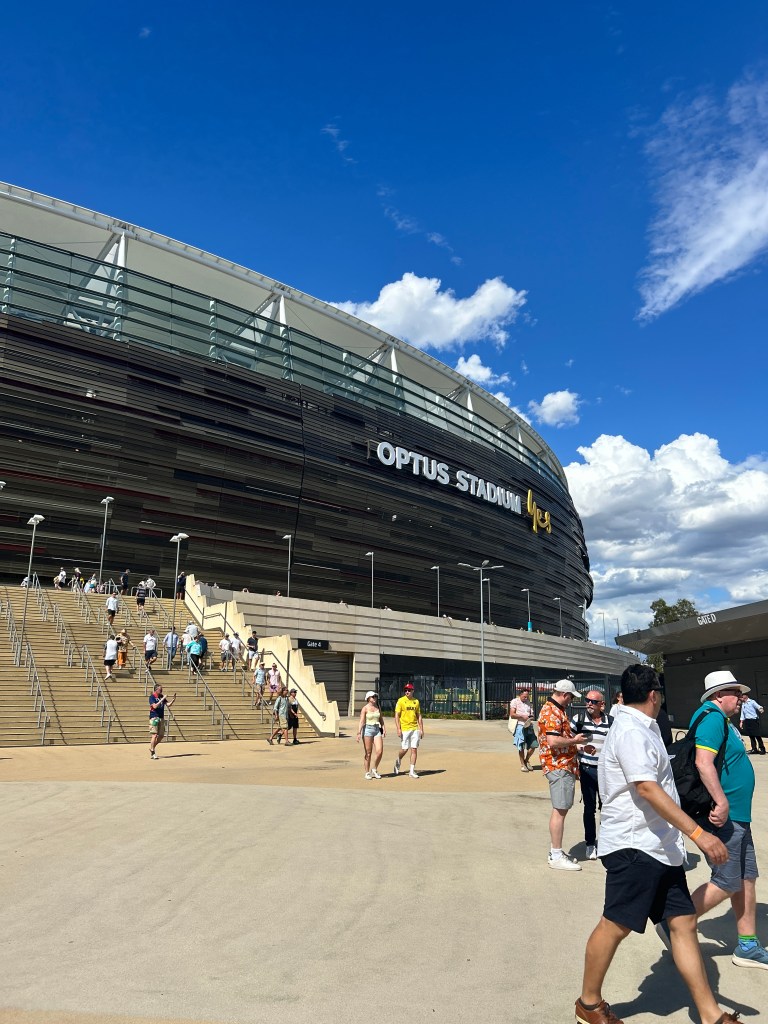
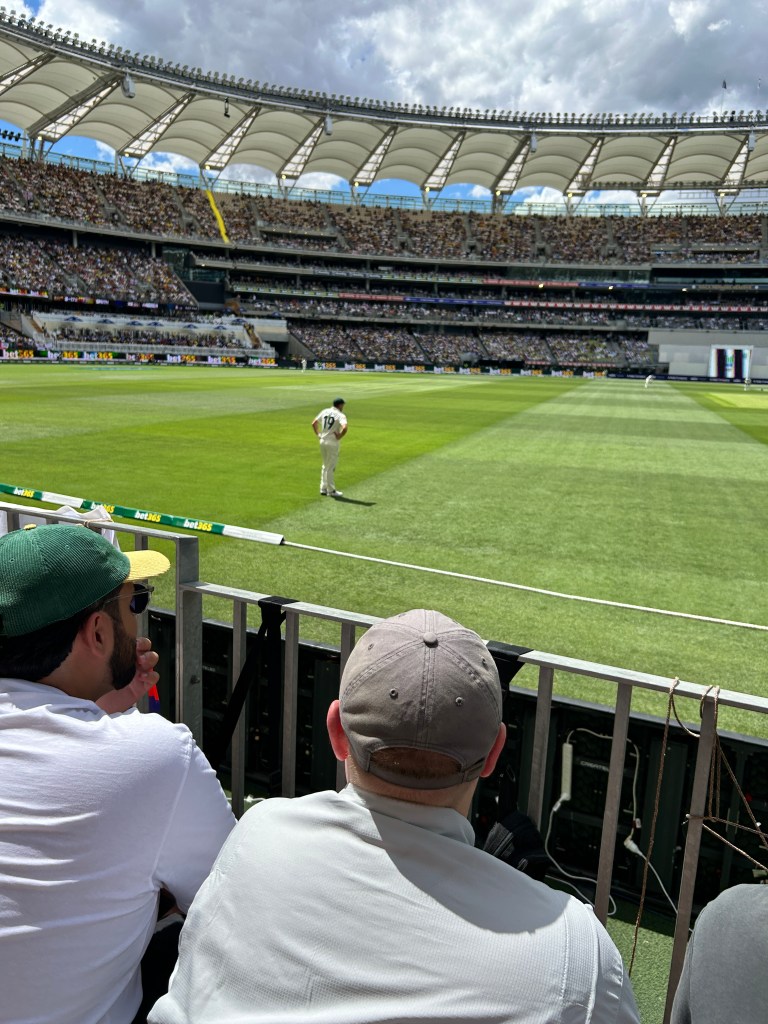
My final day in Perth was spent at Optus Stadium to watch the first day of the first Ashes Test, I had lots of messages from Rajiv, Ajay and my Brother Baba, who were mighty envious! It was really only for them that I went so that I could report back – apparently it was a very big deal and I had to go! I had managed to get a ticket that said ‘restricted view’ but at least was a ticket and it was only AUS100 which is less than £50.
Unfortunately it was a blisteringly hot day and although my seat was 2 rows up from the pitch side, it was in full sunlight! I got lots of pictures and videos that I sent back and so that was good enough for me, I made it to just after lunch as it was going really slowly. England were all out for some silly little score in really quick time to Australia came in to bat and England were bowling well, not allowing Australia to score but nothing much was going on. When I got back to the hostel maybe 45 mins later, Australia were something like 4 for 45 so didn’t do too badly. Obviously it all went tits up the next day and the first test was over in just 2 days 😴.
The absolute highlight of my Perth stay was the exhibition of the Terracotta Warriors at Perth Museum, yes, sounds daft, but it was. It was the first time that anything about the site was sent out of China, there were 5 of the actual warriors and some other pieces, and some replicas of the carriages. Created by the first Emperor of China Qin Shihuang over 2000 years ago. Having belief in the afterlife, he built a mausoleum to help him after his death, fairly similar to the Egyptians I suppose? I won’t go into the Chinese ancient history here as it will take forever!
What was interesting was that each of the gazillion statues that have been found, has a different face and characteristic. Their hair, their uniform, even their facial expressions are all individual to each statue. This tells us the standing of the soldier, what their role was and their ranking. Also, they are said to be life size and they are huge, much taller and broader than I was expecting but I was told that our understanding of the original populations from the north of the area, like Mongolia, were of a warrior build.
I was really stupid that day and forgot my phone so was not able to take any pictures – so annoying! But I want to do a China adventure in the next few years so will go to the actual site in China.
The hostel I was staying at has been one of the best so far for me. A reoccurring theme has been that most of the residents are long term ones, young people from all around the world, mainly Europe, who are on work travel visa’s. Some have been there months, possibly up to a year, whilst they work to save up to go travelling.
Lots of English late teens/early 20’s as well as Spanish and French. Some worked at the hostel and had other part time jobs. It was really interesting to see you nations interact with each other. For example the french always cooked and ate their meals together. Everyone made something different but sat down together to eat. The Asians were very quiet and respectful and kept themselves to themselves. I think that it is an amazing opportunity for young people to be able to go to another part of the world, to be able to work, travel and meet others, it really opens their minds to the outside world and gain perspective in life. I know that there is an agreement between UK/Aus/NZ and Canada for young peoples temp work visas and the experience is priceless.
I think that’s it for Perth, I can always tack something on to the next post if needs be – which will be Adelaide, Melbourne and Tasmania!
Signing off from Port Macquarie…



 Adventures of Nisha