I am sat here in the garden of my hostel in Perth, having arrived late last night. One of the lessons I have learnt writing this blog is to not wait too long to write a post as then it all gets too late, I forget stuff or then can’t be bothered! Having arrived in Australia means that I have completed my travels to Malaysia so I should get on and complete the Malaysian part of the blog!
I can’t believe that it has already been 2 weeks since I left UK and ‘done’ Malaysia, it all goes so fast which shows how important it is to do these things and embrace it all – the good and the bad.
I was already aware that Penang had a really good foodie reputation and I wanted to make sure I tried everything.
Just a few shops down from my hostel on Chulia Street, I saw that there was a highly rated Hainan Chicken & Rice place, I had seen similar stalls around during my walk around Georgetown but saw that this was in the Michelin Guide?! Obviously I went in..


It was brunch time on Sunday and loads of locals were there as I think it is a very traditional thing to do with family on a Sunday, that and Dim Sum. It was very simple, either roast or poached chicken with a broth and some rice, it was super tasty though. I saw customers going up to the lady cutting up the chicken and I think that they were choosing which bit they wanted! It isn’t expensive, I think I paid 10RM which is around £2.
The Hainan community were among the last of the Chinese to arrive in the British-ruled region, the community took on the only remaining roles available at the time, serving as cooks and housekeepers for the British colonialists. Known for their precision, the Hainanese earned a reputation for their cooking skills.
As the British started leaving Malaya, the lost their livelihood and found their world turned upside down. But rather than admit defeat, the Hainanese cooks started their own food-related businesses and almost all the restaurants and banquet halls. The place I went to was founded in 1950 and is run today by the two grandsons of the founder, Goh Thew Chik. Goh See Yong, 70, runs the kitchen and Goh See Wah, 69, is in charge as the head chicken chopper!
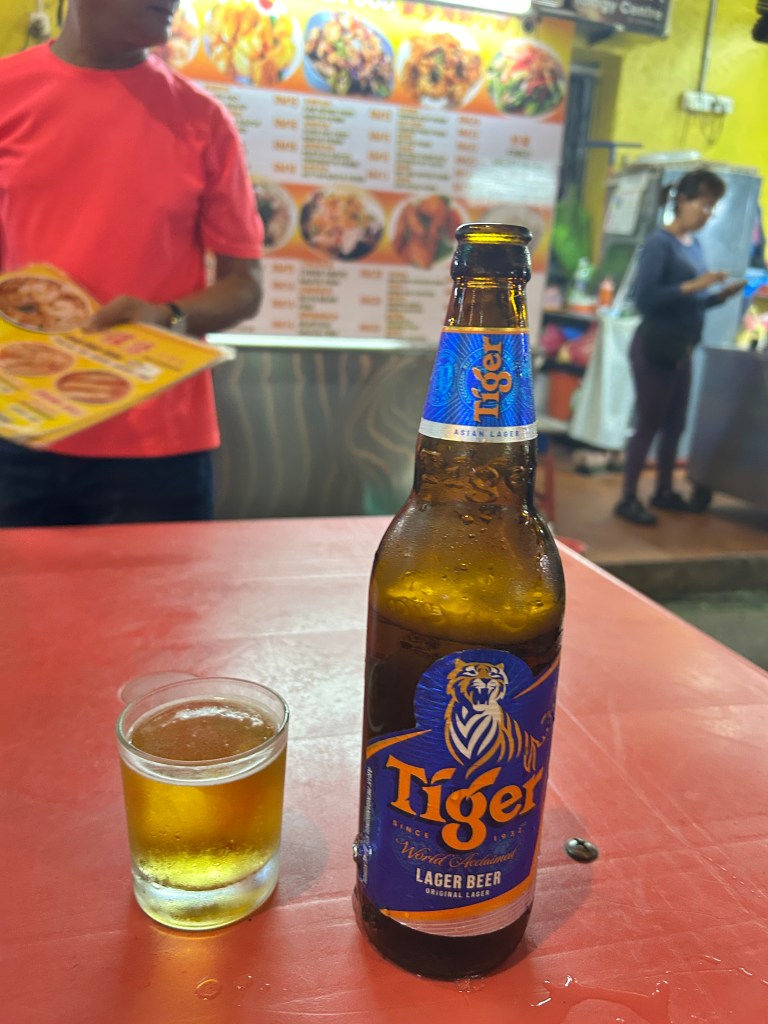
Around the corner was the Chulia Street night market which had loads of hawker food stalls which I went to a few times. Hawker centres were set up to help make food stands more sanitary, you sit at a table and everyone comes to you from the different stalls to entice you with their dishes and then you get offered a beer – which changes in price depending on how many customers they have had in the evening. When one of the kids from the drinks place gets me a bottle of Tiger beer and says it is 22RM, I look shocked and say what? At one point, he said that he charges me the same every time and every time I question the price. He was very funny!
It was a busy corner, with traffic going by and people running around but the food was good. They asked what kind of thing I wanted, meat or fish and then suggested stuff, I just said yes to everything. They work really hard and I think that they are struggling for business, hopefully things will pick up.
There is a history around hawker centres in Penang, during the 1950s, the British were concerned about the economic influence of the hawkers and kept them under surveillance. The government tried to curb their activities but the hawkers threatened to fight against the government and participate in the Malayan Emergency.
By the 1960s the authorities began to crack down on illegal activities and unlicensed hawkers. Health and safety considerations also became paramount to the authorities as the hawkers had little sanitary considerations and frequently occupied the streets even after being fined.
In 1967, the first two hawker centres in Malaysia were built in Kuala Lumpur as part of a programme to improve hygiene standards and clear the roads of streetside stores.
In Penang most hawkers were also moved into fixed locations as hygiene and traffic concerns grew. Moving to fixed locations is often unpopular with hawkers, who don’t want to lose customers and the higher fees. Labour shortages in the 1980s and 1990s led to many hawker centres being staffed by foreigners. In 2014, after it was reported that in 68 hawker centres 119 foreign cooks were identified, a law banning foreign cooks was proposed and gathered support, finally being passed in 2016. This was said to be to protect Penang’s heritage, and 13 dishes were declared by the government as heritage dishes; 10 were of Chinese origin, 2 of Tamil origin, and 1 of Malay origin. Foreigners were still able to work as assistants, or as cooks in restaurants.
Cooks working in hawker centres are mainly older individuals, challenging the sustainability of the business. Hawking is viewed, including by many hawker. Overall business in Penang’s hawker centres decreased by 50%, as national regulations limited their opening hours.
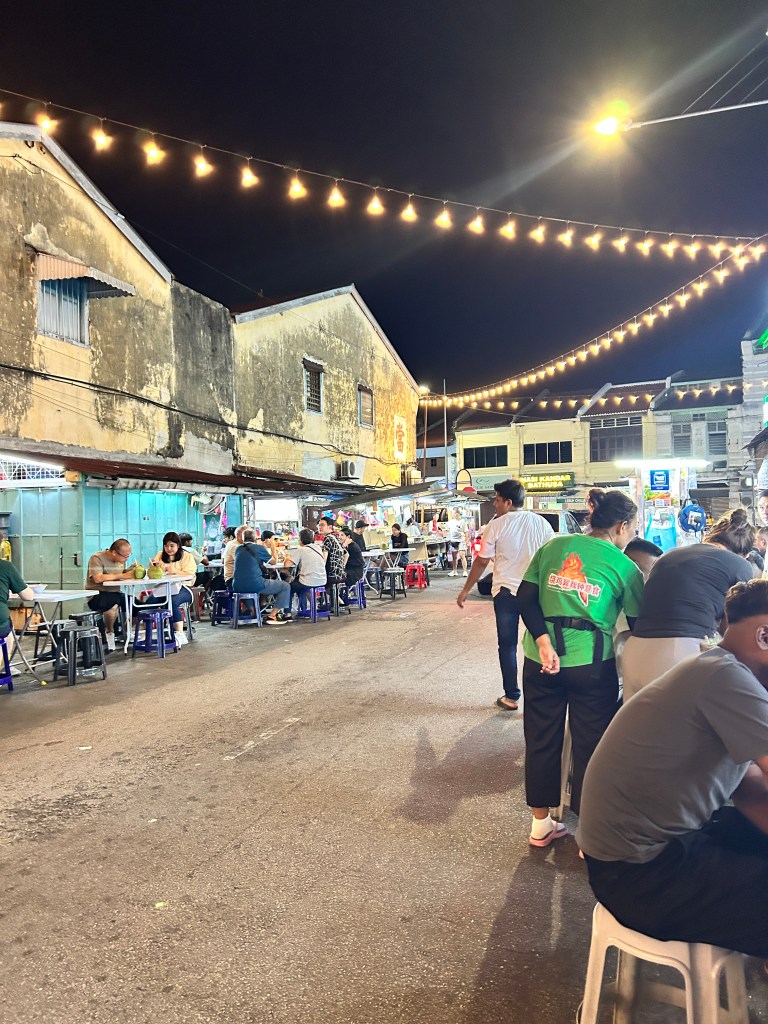

I love taking videos as I think that it gives a better idea of the atmosphere and what things are really like, unfortunately it doesn’t provide the smells.
On my penultimate evening, I went on a food tour, on the back of a bike, I remembered that I really enjoyed the one I took in Vietnam so I was really keen to find one in Penang. The company has recently started up and there were some teething issues, but on the whole it was a great evening. I saw parts of Georgetown that I would never have gone to before.
There were 3 of us on the tour and the drivers we had had ‘proper’ day jobs, mine was a police officer and there was also a kindergarten teacher. They said that the cost of living is quite high – the rent, utilities etc, so they need to supplement their income. It’s weird and food is really cheap and people hardly cook at home as it is so cheap to eat out.
Our first stop was quite far out of town but right on the beach for salt and pepper prawns, they were amazing, so fresh and tasted of the sea. We then had Laksa which is very different from the Laksa that I am used to, very fish broth base and flavoured with tamarind, no coconut milk. Apparently Malaysian laksa is a different style and they call the Thai version curry laksa. Next Nasi Kandar, steamed rice served with a variety of curries and side dishes. Originating from Indian Muslim traders and the name means ‘rice carrying on the pole’ – referring to when vendors used to carry pots of rice and curry on a pole balanced on their shoulders.
We then went to this incredible fish food court, Northam Beach Cafe, but we had chicken wings there – they were still good though. The finale was dessert – I have never seen anything like it, Ais Kangang. Shaved ice, condensed milk, jelly, peanuts, red beans, cendol (like jelly noodles) and then wait for it SWEETCORN topped with ice cream. It was terrible but apparently it is very popular. I am going to post the pictures, see if you can pick it out.
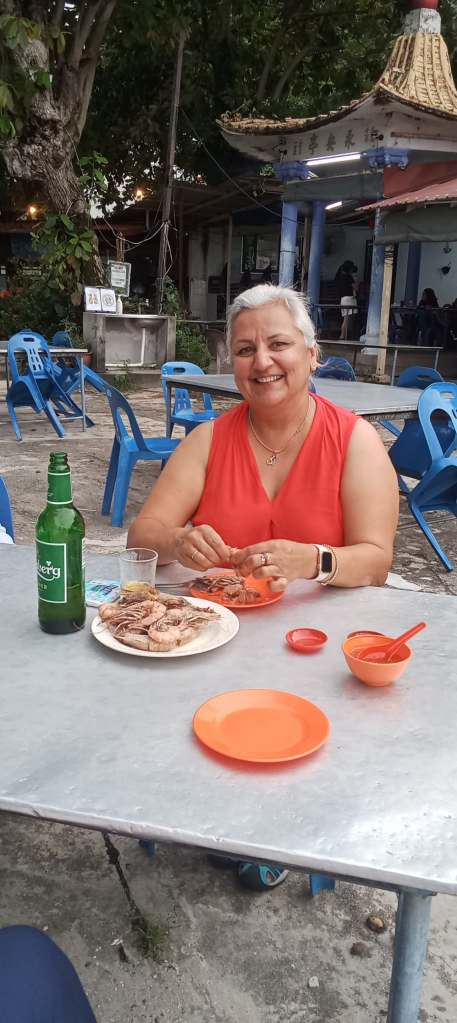


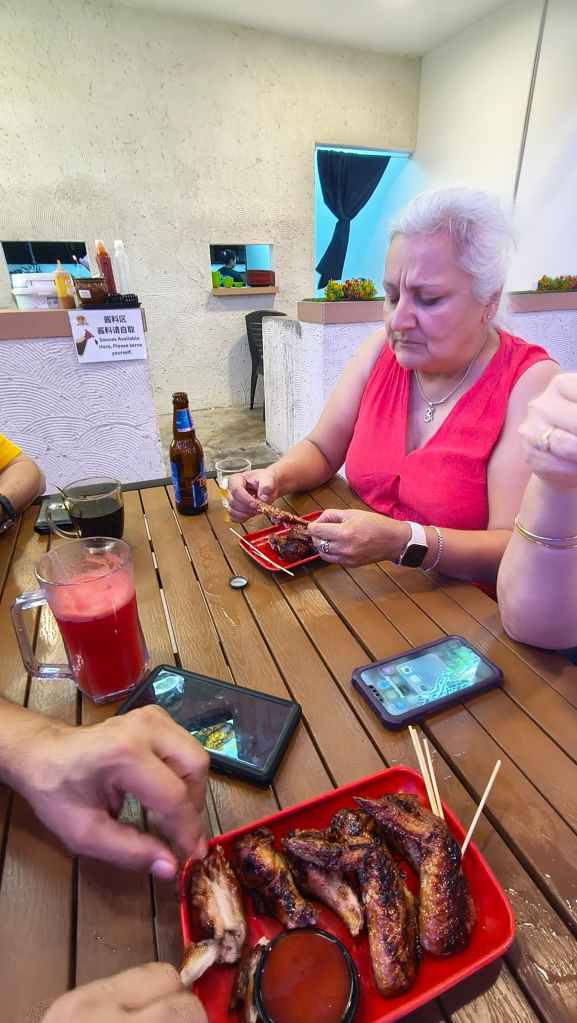
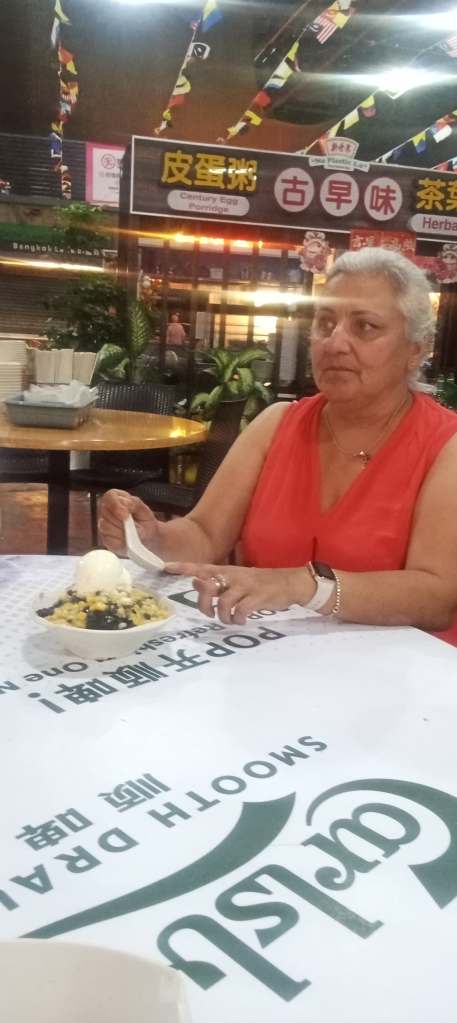
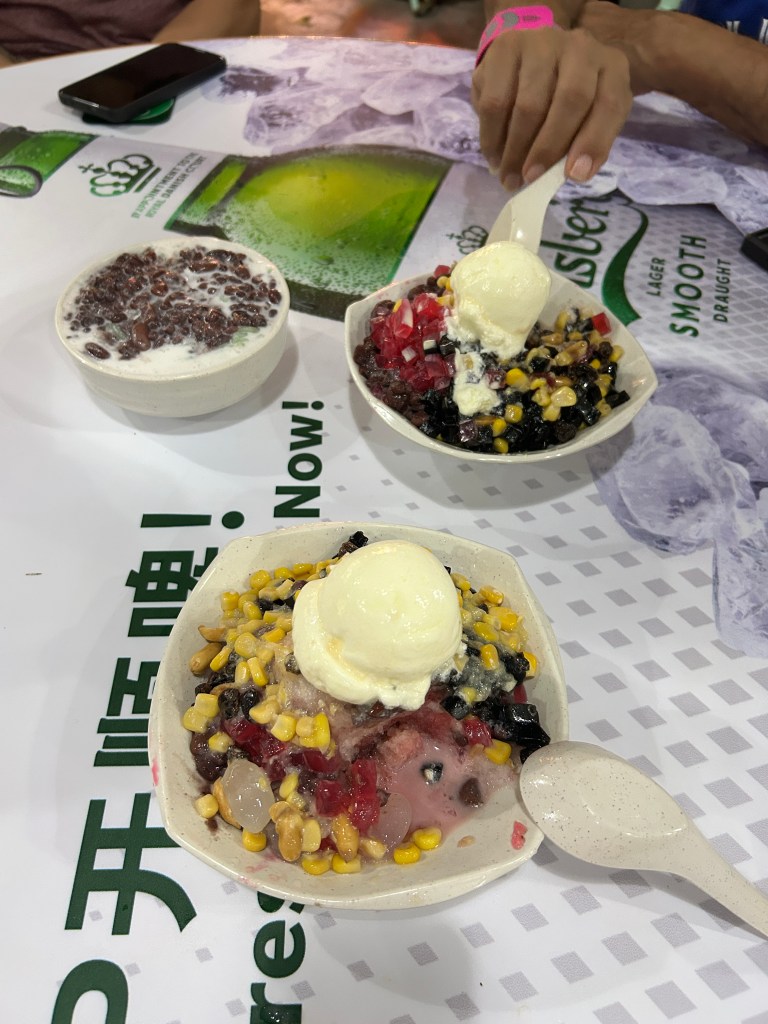
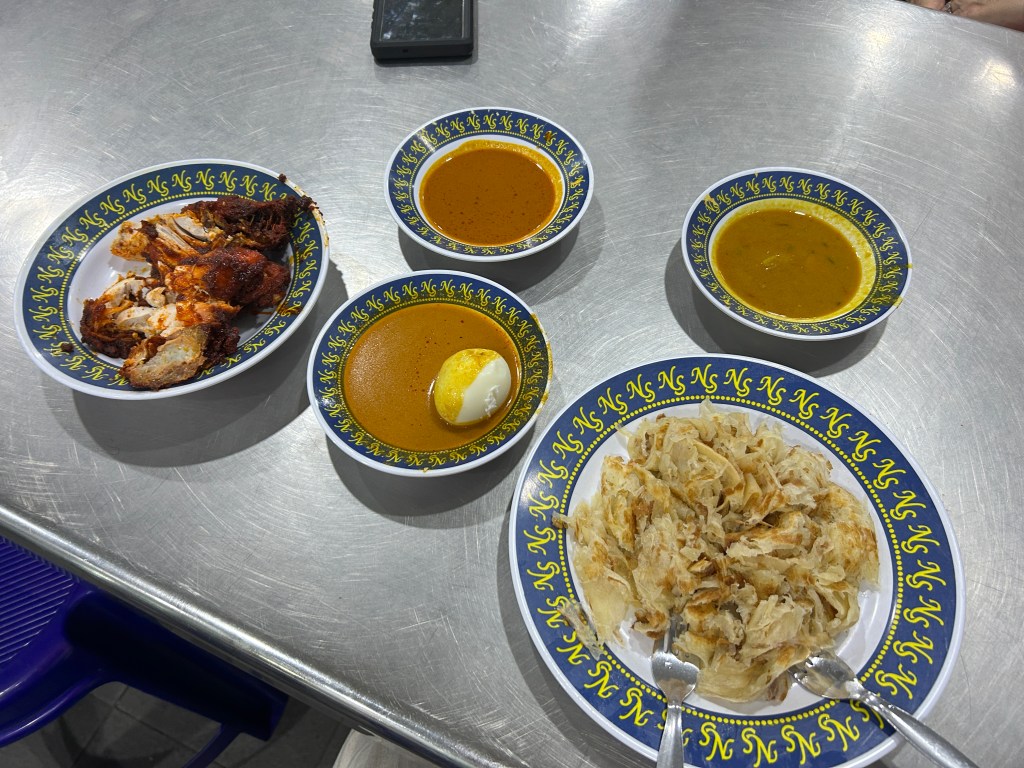


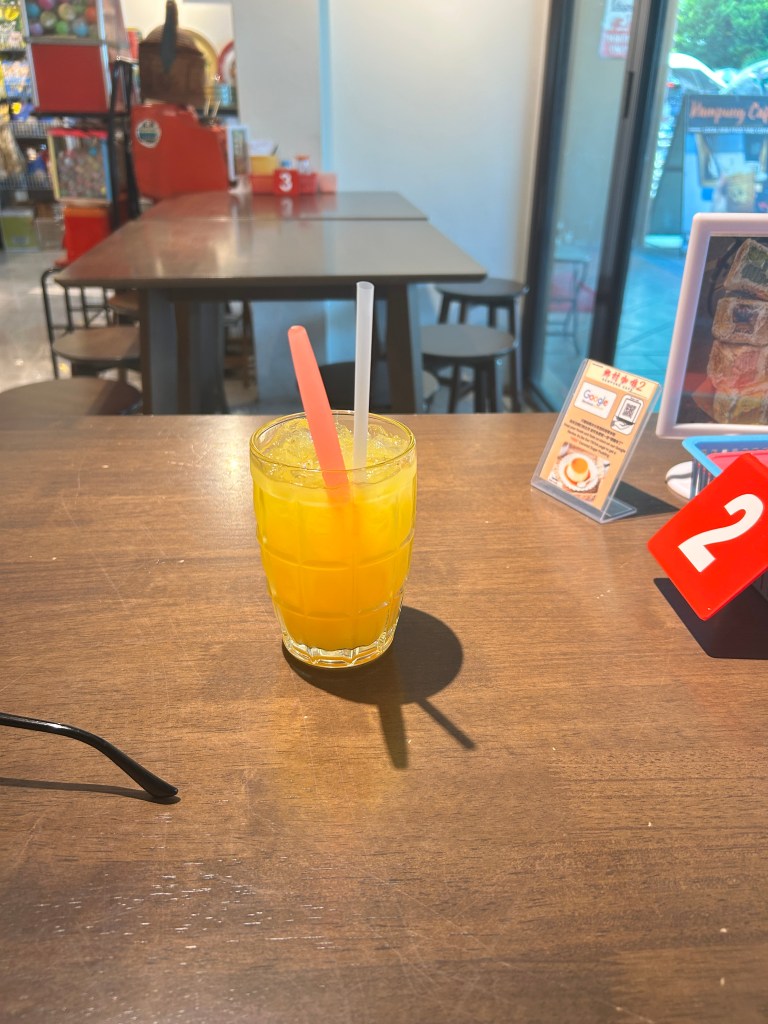
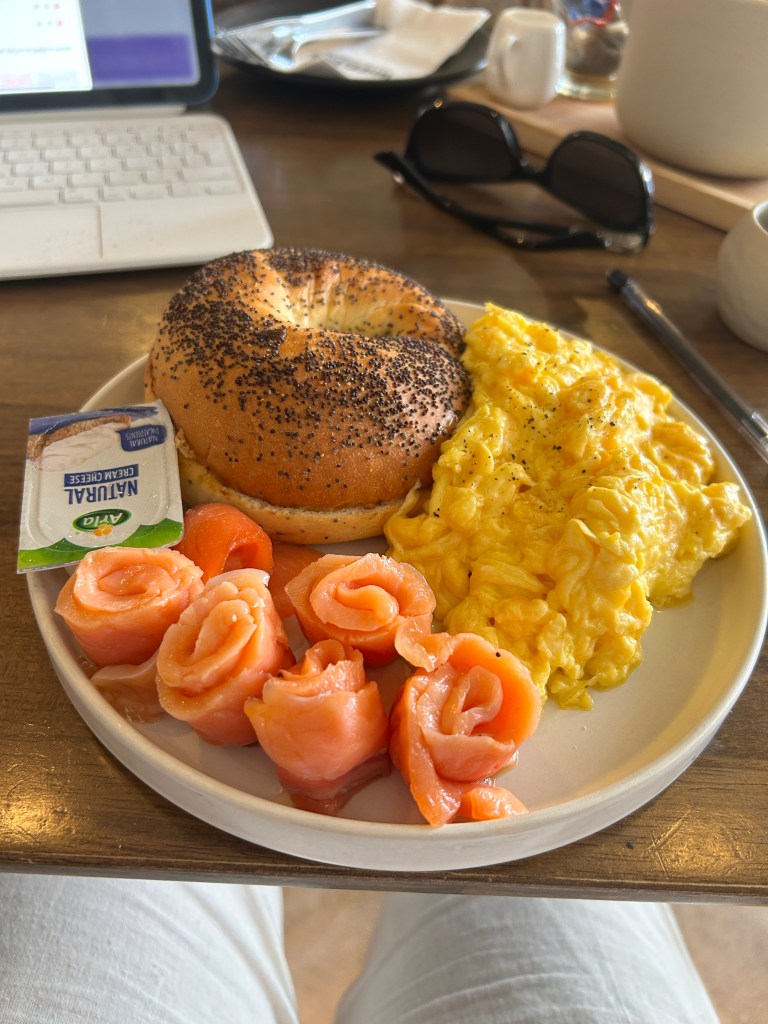
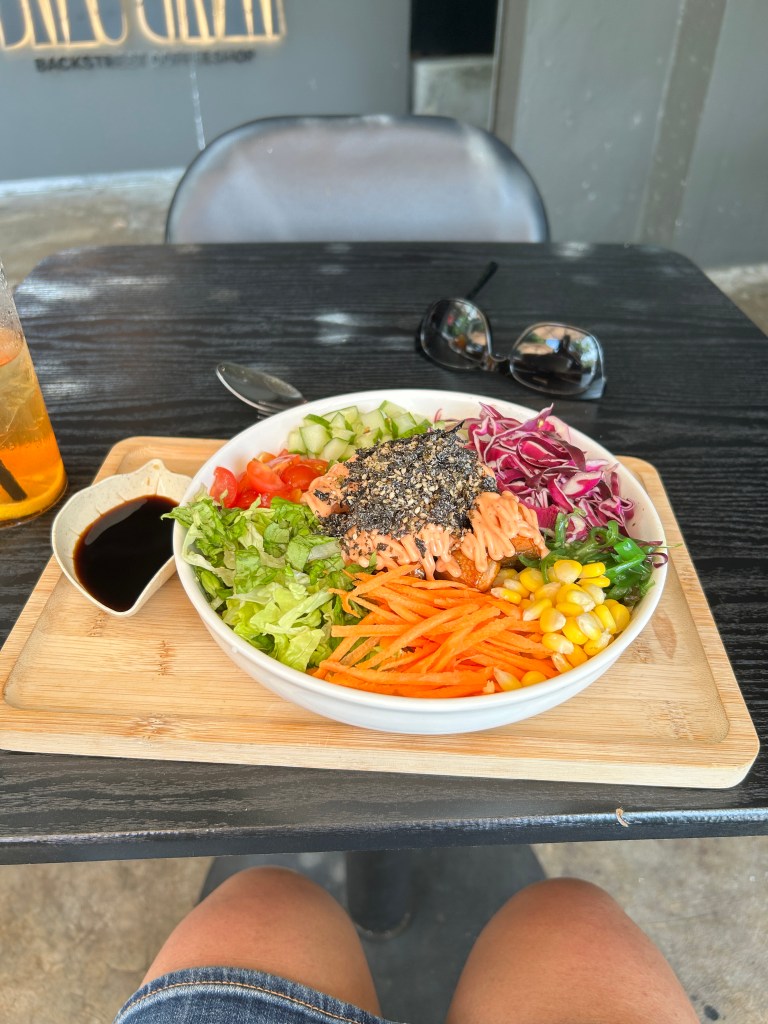
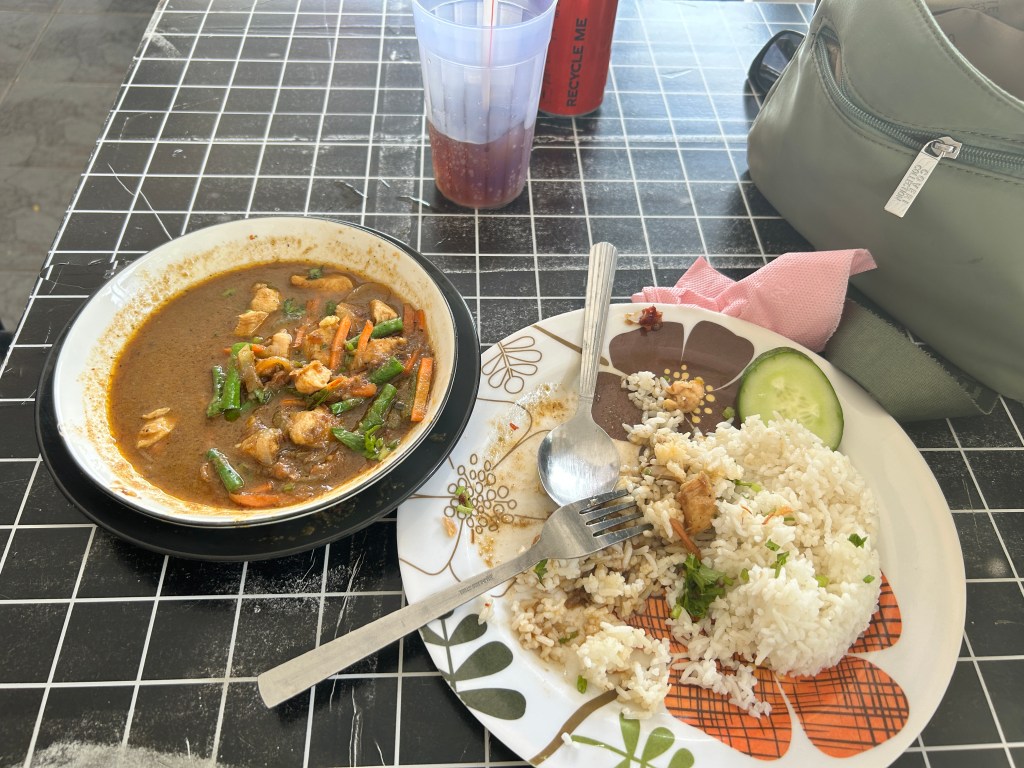
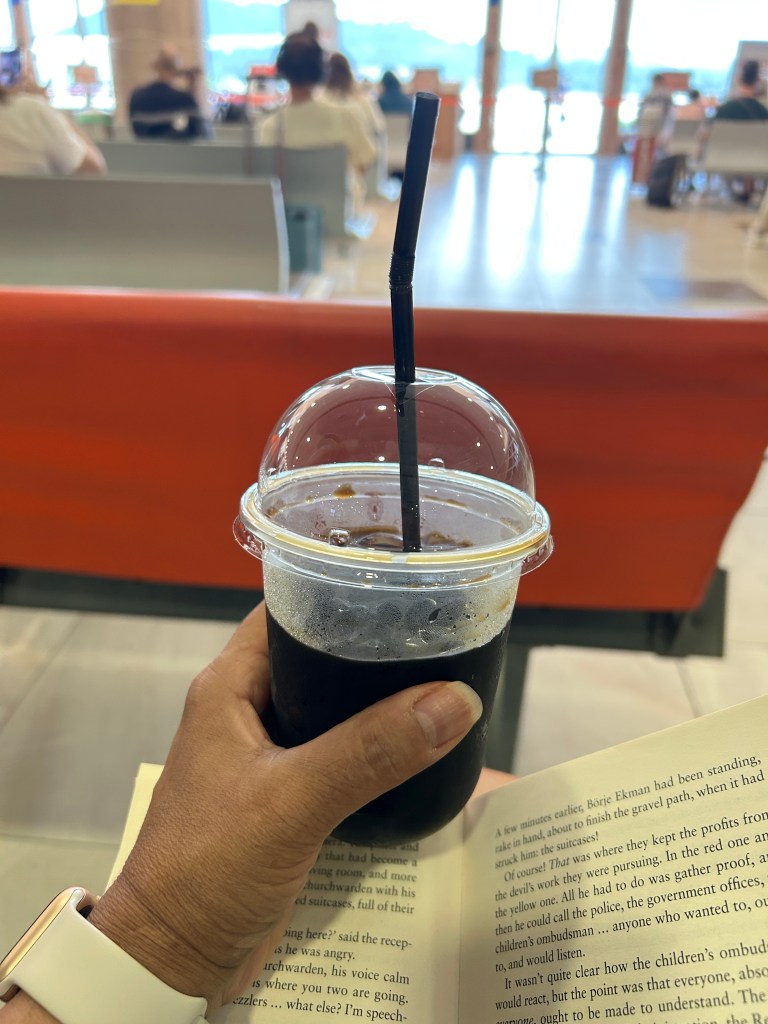
I also went to a food court near the more commercial and office area on Weld Quay and workers were all coming for their lunches. I had Pad Thai and satay that day! As per a request from Rajiv and Ajay, I have taken pictures of nearly everything that I have drunk or eaten, so here is a load of pictures!
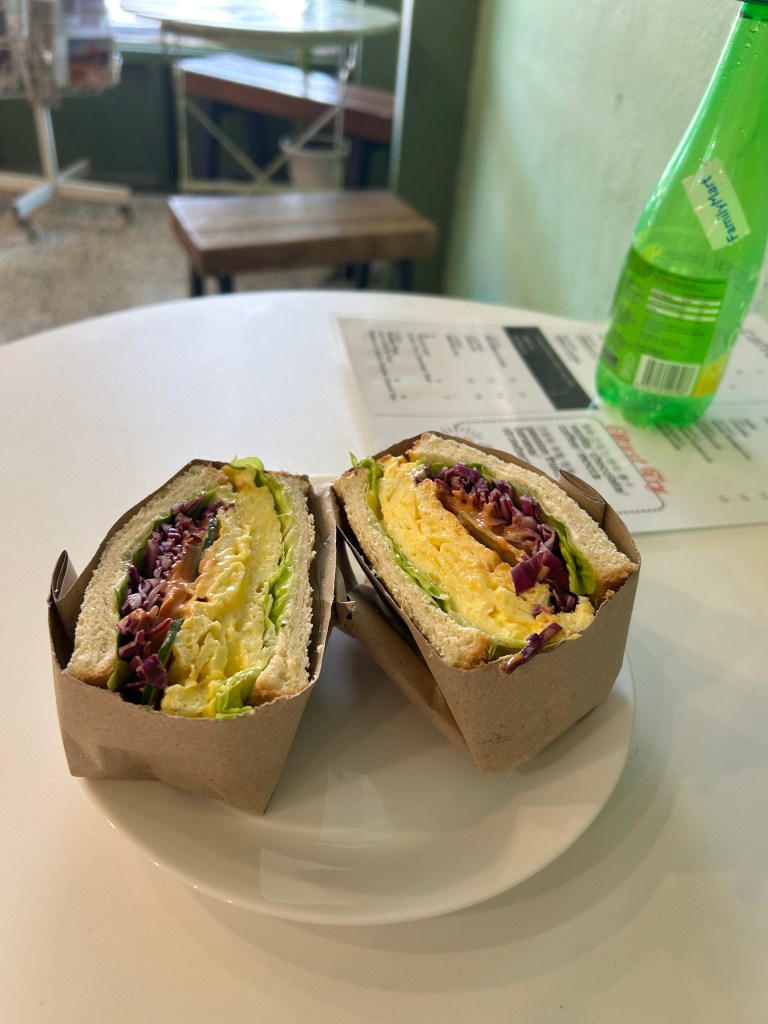
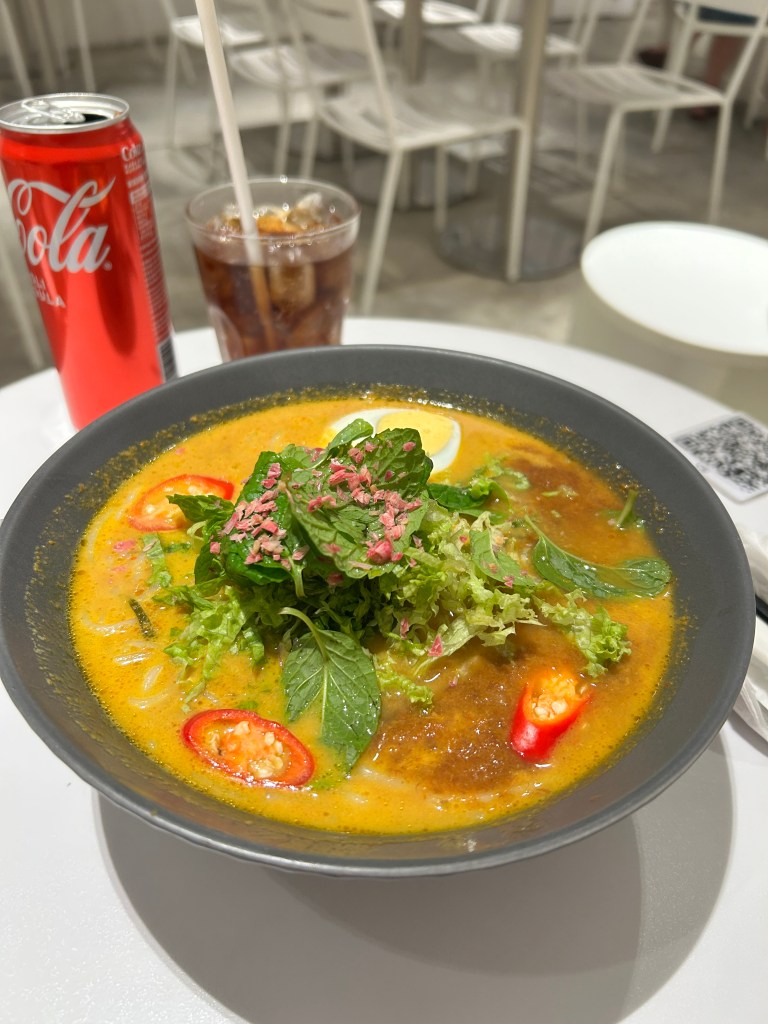








So, I now have to go and check in to get access to my room and this has taken me 2 hours to write, but I do like to put effort in to it!
I want to write another post on Penang and then Langkawi, just to round up and make some reflections, so until next time Dear Reader.
 Adventures of Nisha
Thanks for the stories and photos of your trip. Really interesting 👌
LikeLiked by 1 person
Thanks, Ray!
LikeLike